-
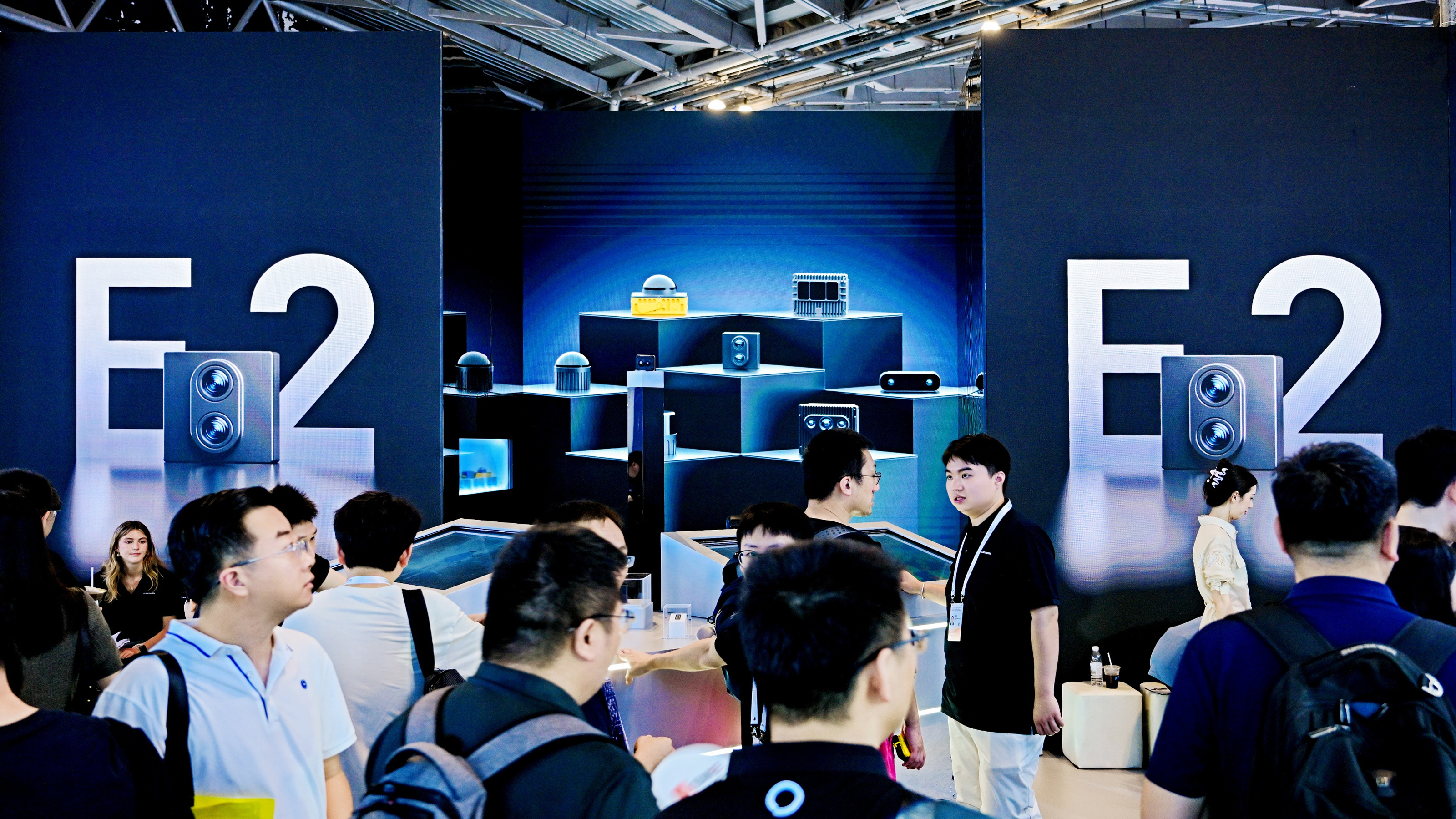
E2, RoboSense's next-generation flagship LiDAR, makes its global debut for high-precision robotic perception.
-
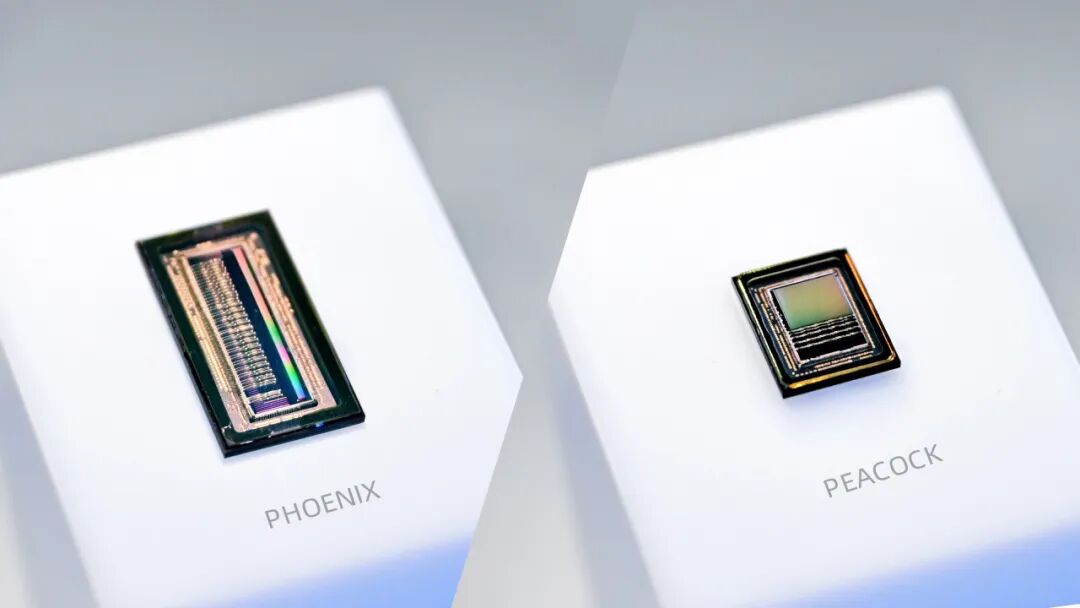
Peacock, RoboSense's fully solid-state ultra-large-array SPAD-SoC, showcases the proprietary chip foundation behind image-grade 3D perception for robotics.
SHANGHAI, China, July 28 , 2026 — RoboSense (HKEX: 2498), a pioneering robotics platform company for Physical AI, introduced E2, its next-generation fully solid-state digital LiDAR, at the World Artificial Intelligence Conference (WAIC) in Shanghai. The company also unveiled Phoenix and Peacock, its dual flagship chipsets built on RoboSense’s proprietary EOCENE SPAD-SoC architecture, marking their first public appearance together.
As robots move beyond controlled demonstrations and into homes, factories, warehouses and public spaces, one challenge comes first: they must see and understand the physical world around them. This requires more than simple object detection. Robots need dependable spatial information to judge distance, shape and free space, then navigate or act with precision. E2 is RoboSense's answer in deployable robotic perception. Built on the company's digital E Platform and powered by its proprietary SPAD-SoC and digital direct time-of-flight (dToF) architecture, E2 adopts a fully solid-state scanning architecture and combines high-precision perception, an ultra-wide field of view (FOV), a compact form factor and outstanding robustness.
With a horizontal FOV of up to 180 degrees and a compact, semi-concealed optical design that exposes only two optical windows, E2 is designed for robotic lawn mowers, humanoid robots, quadruped robots, drones, and spatial intelligence data acquisition devices, delivering accurate and reliable perception across diverse robotic applications. At the exhibition, RoboSense also conducted a live point-cloud demonstration, giving visitors a direct view of how E2 captures the depth, contours, and spatial position of surrounding objects in real time.
At the silicon level, Phoenix and Peacock address complementary perception needs. The two flagship SPAD-SoC chipsets made their first exhibition appearance at WAIC. Phoenix brings high-precision and long-range detection to demanding perception tasks, while Peacock pairs a fully solid-state, large-array design with an ultra-wide FOV and image-grade 3D perception for robotics. Shown alongside E2, the two chipsets highlighted how RoboSense is translating proprietary silicon development into a broader portfolio of deployable perception products for Physical AI.
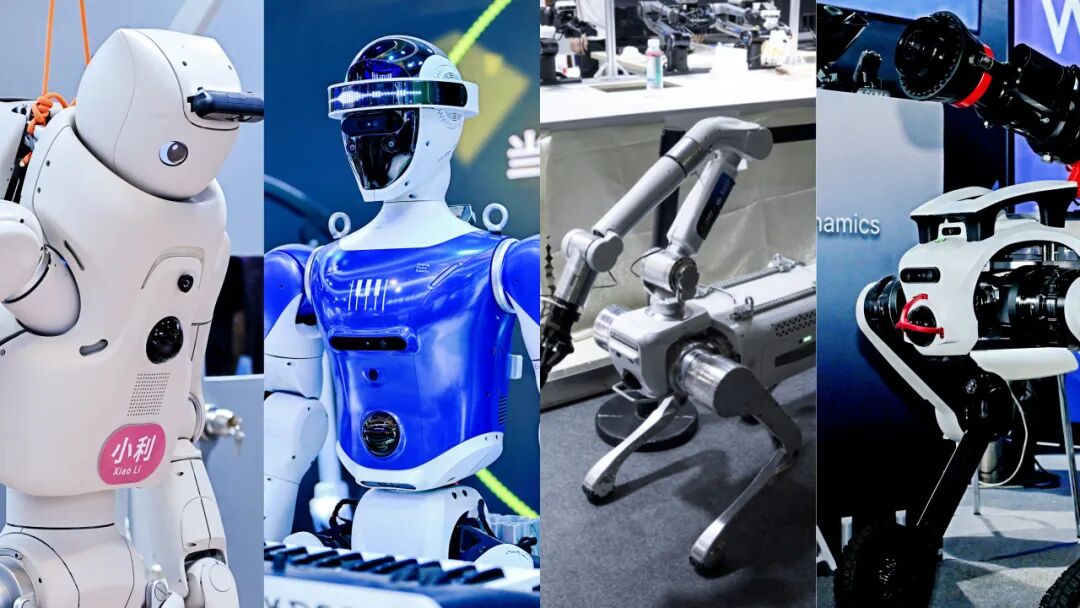
That broader perception portfolio was also visible across the exhibition. Robots equipped with RoboSense LiDAR from AgiBot, Pudu Robotics, Youibot, Geek+, and WeRide demonstrated applications spanning service robotics, industrial automation, logistics, and autonomous driving. While these systems differ in form and purpose, each relies on accurate spatial perception to operate reliably in changing environments.
The shift from demonstrations to real-world deployment is central to the Physical AI era. AI systems must sense, interpret, and act in the physical world. As this transition continues, reliable perception will become foundational capability for robotics. Building on its proprietary chips, digital perception products, and mass-production capabilities, RoboSense is working with global industry partners to enable high-quality spatial data flows that connect robots, AI models, and the physical world, supporting the broader commercialization of Physical AI.
About RoboSense
RoboSense (HKEX: 02498) is a pioneering robotics platform company for Physical AI. Based on its in-house optoelectronic chips and perception algorithms, and supported by its scaled mass production capabilities, RoboSense provides robots with core components and infrastructure, including LiDAR and Space Camera. Its products have been deployed at scale across more than ten application areas, including smart vehicles, Robotaxi, robotic lawn mowers, autonomous logistics, embodied intelligence, and commercial cleaning robots. RoboSense serves more than 3,400 robotics clients worldwide and is ranked No. 1 globally in robotics LiDAR market share in 2025.



 service@robosense.cn
 0755-86325830
 46057 Five Mile Rd., Plymouth, MI 48170